
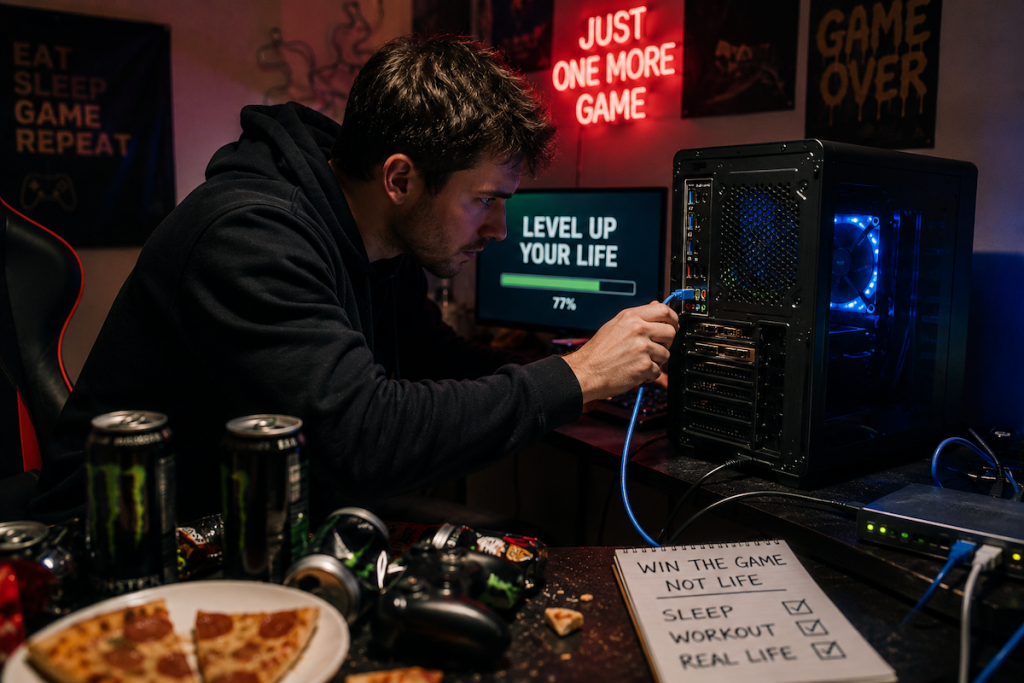
The term “gaming abithelp” is a bit of a mouthful, but thank the younger generations for making up confusing slang. Here is the quick translation: it reads as “gaming a bit help,” a bit of help with gaming.
That is exactly what this guide gives you. Whatever sent you here; a game that will not stay connected, a support page you cannot find, an account you are worried about, or a nagging sense that you are playing more than you meant to- the fix is below. We cover four things: sorting out the problems that ruin a session, getting real support when something breaks, keeping your account and money safe, and spotting the point where gaming stops being fun. No filler, just the help the search implies.
What “Gaming Abithelp” Actually Means
The phrase looks like a brand, but it is really two words squashed together. “Abithelp” is “a bit help.” So gaming abithelp is someone asking for a bit of help with their gaming, whether that is a technical problem, a safety worry, or a habit that has crept up on them.
There is also a website called abithelp.com, a tech and gaming information site that publishes guides on PCs, phones and gaming culture. It is a real site, but it is not what this article is about, and this page does not endorse or recommend it. If you landed on the phrase and wondered whether it points to a company or a product, the honest answer is that most people typing it just want practical help, which is what follows.
The rest of this guide is built around the four questions behind that search. First, the everyday problems that break a gaming session and how to fix them fast. Second, where to turn for genuine support. Third, how to keep your account and your money out of the wrong hands. And last, how to tell when play has tipped into something worth watching, and where to get help if it has.
Fixing the Most Common Gaming Problems
Most gaming problems come down to a handful of causes, and you can clear the majority yourself in a few minutes. Work through the checks in order rather than changing five things at once, so you know what actually fixed it.
Lag, crashes and connection drops
Start with the game’s own server status, because if the servers are down, nothing on your end will help. If they are up, the next suspect is your connection. A wired Ethernet cable beats Wi-Fi for stability every time, and swapping to one solves more lag complaints than any in-game setting. After that, update your graphics drivers, since outdated drivers are a common cause of stutter and crashes on PC. Close background apps and any downloads eating bandwidth, then lower a couple of the heaviest in-game settings, usually shadows and reflections. If crashes continue, verify or repair the game files through your launcher. Of all these, going wired fixes the largest share of connection problems.
Updates, installs and storage headaches
Failed updates and stalled installs usually trace back to space or a stuck cache. Check your available storage first, since a drive near full will quietly break both. On PC, clearing the launcher’s download cache restarts a jammed update without losing your game. If a download crawls or freezes, pause it, wait a moment, and resume, which forces it to reconnect to a fresh server. On console, closing and reopening the game, or rebuilding the system’s database, clears most install errors. When a game launches but behaves oddly, use the Verify or Repair Files option before reinstalling, as it fixes corrupted data without the long re-download.
How to Get Real Help and Support
When self-help runs out, where you go next matters. The right channel is free and official; the wrong one costs money or your account. Start at the top and work down.
Official and in-game support
Go to the platform or publisher first: Steam, PlayStation, Xbox, Nintendo, or the game’s own support site. These channels are free, and they are the only ones that can touch your account, billing or a broken purchase. When you open a ticket, give them what they need in the first message: your account name or ID, the exact error text or code, the platform you are on, and the steps that led to it. A ticket with those details tends to get solved in one reply, while a vague one bounces back and forth for days. Most games also list a support link on their official site and inside the in-game menu.
When to Be Wary of Third-Party Support
Search results and ads are full of “gaming support” sites and phone numbers that have nothing to do with the companies they mimic. The rule is simple: real platform support never charges you to unlock, recover or fix a basic account, and never asks for your full password. Before you trust a page, check the domain against the official site’s address, not just the logo or the wording. If a “support agent” wants remote access to your machine, a payment in gift cards, or your login in full, it is a scam, and closing the tab is the right move. When in doubt, type the platform’s address yourself instead of clicking a result.
Staying Safe: Threats That Target Gamers
Gamers are a favorite target for online crime, because active accounts hold real value: linked payment cards, rare items, and years of purchases. A little care keeps almost all of it out of reach.
Account theft, phishing and scams
Most stolen accounts are handed over by their owners without realizing it. The classic routes are a phishing message promising free skins or currency, a fake giveaway that asks you to “log in to claim,” and a lookalike login page one character off from the real address. The defenses are dull and effective. Turn on two-factor authentication on every gaming account, so a stolen password alone is useless. Use a different password for each platform, ideally through a password manager. And never click a login link sent to you in chat; open the site yourself. If an offer needs your credentials to hand over something free, it was never free.
Cheats, mods and malware
Pirated games, cheat tools and unofficial mods are among the most reliable ways malware reaches a gaming PC. The people distributing free cheats are rarely doing it out of generosity, and bundling a keylogger or a hidden miner is often the point. The trade-off is real: the cheat might work, and it might also quietly drain the account you use it on. Stick to official stores for games, and get mods only from established, well-moderated communities such as a game’s recognized mod hub or workshop. If a download comes from a random link, a stranger in chat, or a site you have never heard of, the safest click is the one you do not make.
When Gaming Stops Being Fun: Problem Gaming and Where to Get Help
The vast majority of gaming is healthy. It is a hobby, a social life, and a way to switch off, and for most people it stays that way. But for a minority the balance tips, and the honest thing is to name that plainly rather than pretend every session is fine. If any of the following rings true, it is worth a look, not a panic.
Warning signs: a quick self-check
Ask yourself a few honest questions. Do hours vanish without you noticing? Are you losing sleep to keep playing, or skipping work, study or people you care about? Do you feel restless or irritable when you cannot get on? Are you chasing a loss, one more match to win back the last one, one more pull to land the item? Noticing one or two of these is common and not a crisis on its own, and plenty of absorbed players tick a box now and then. It is the pattern that matters: several of them together, holding for weeks, and getting in the way of the rest of your life.
Loot boxes, microtransactions and gambling-style spend
The money side deserves its own look, because some game mechanics are built to keep you spending. Loot boxes in particular work much like gambling: a random reward, a near-miss, and the pull to try once more. That design is effective, and it catches adults and children alike. A few controls take the sting out of it. Set a monthly spend limit and treat it as fixed. Remove saved payment details so a purchase takes a deliberate step rather than a tap. Use the spending caps and parental controls built into every major console and store, which let you set hard limits per account.
Where to get help
If play has tipped into something that worries you, you do not have to sort it alone. Start with a doctor, who can point you toward proper support and rule out anything else going on. There are also dedicated services for problem gaming, such as Game Quitters, along with national helplines for gambling-style spending in many countries. The table below is a quick map of where to turn for each kind of problem covered in this guide.
| Type of help | Where to go | Best for |
|---|---|---|
| Game or platform problems | Official publisher or platform support | Bugs, account and billing issues |
| Staying safe | Enable two-factor authentication and report scams to the platform | Account theft and phishing |
| Problem gaming | A reputable gaming-support service or a doctor | When play feels out of control |
Frequently Asked Questions
What does “gaming abithelp” mean?
It reads as “gaming a bit help,” meaning a bit of help with gaming. It is not a product or an official service. Most people searching it just want practical help with a game problem, their account, or a gaming habit.
Is abithelp.com legit?
Abithelp.com is a real tech and gaming information site that publishes guides on PCs, phones and gaming topics. It is a content site rather than an official support channel, so for account, billing or in-game issues you should still go to the game’s own platform.
How do I fix constant game lag?
Check the game’s server status first, then switch from Wi-Fi to a wired connection, which resolves most lag. After that, update your graphics drivers, close background downloads, and lower the heaviest graphics settings such as shadows and reflections.
Is my gaming account at risk of being hacked?
It can be, since gaming accounts hold payment details and valuable items. Turn on two-factor authentication, use a unique password for each platform, and never log in through links sent in chat. Those three steps stop the large majority of account theft.
How much gaming is too much?
There is no fixed hour count. The warning sign is impact: lost sleep, neglected work or relationships, spending you regret, or irritability when you cannot play. A pattern of those over weeks matters more than any single number. Being out of touch with reality can also be a major red flag; the chances are you are not going to become a multimillionaire gamer (sorry to be the bearer of bad news), and when your reality warps with the real world or you start to smell a little funk… it may be time to log off and decompress your dopamine signals for a bit.
Where can I get help if gaming feels out of control?
Start with a doctor, who can guide you to the right support. Dedicated services such as Game Quitters help with problem gaming, and national helplines cover gambling-style spending on loot boxes and microtransactions.
Gaming Abithelp: Getting the Right Help for the Right Problem
The phrase behind your search was only ever “a bit help” with gaming, and the fix depends on which problem you brought. For a game that stutters or will not update, work the technical checks in order and go wired before you touch anything else. For anything involving your account, your purchases or a broken game, use official support and ignore the paid imposters.
Protect the account itself with two-factor authentication and a password you use nowhere else. And if the honest self-check struck a nerve, treat that as useful information, not a verdict, and reach out to a doctor or a dedicated service. Match the help to the problem, and gaming abithelp stops being a search and starts being something you have sorted.